
What is heatstroke?
Heatstroke is an extremely dangerous condition that can develop if a dog gets too hot. Normal body temperature for a dog tends to sit between 38-39°C (100.4-102.2°F), this can rise a bit if they are unwell with a fever. If your dog’s body temperature goes above 40°C (104°F) they are at risk of heatstroke, which can cause seizures, organ damage, internal bleeding, coma and even death. Heatstroke is more dangerous the longer it lasts, so the quicker your dog is cooled down and treated by a vet, the better their chance of a full recovery.
Causes of heatstroke
Dogs have limited ability to sweat, so instead, they pant and use shade to cool themselves down on warm days. However, dogs also love to run around, which is why nearly three quarters of heatstroke cases develop while playing and exercising. It can also be caused by simply sitting somewhere too warm, or being trapped somewhere hot, such as a car, conservatory or room without proper ventilation.
Any dog can develop heatstroke, but flat-faced, overweight, giant-breed, thick-coated, very old and very young dogs are most at risk.
Signs of heatstroke in dogs
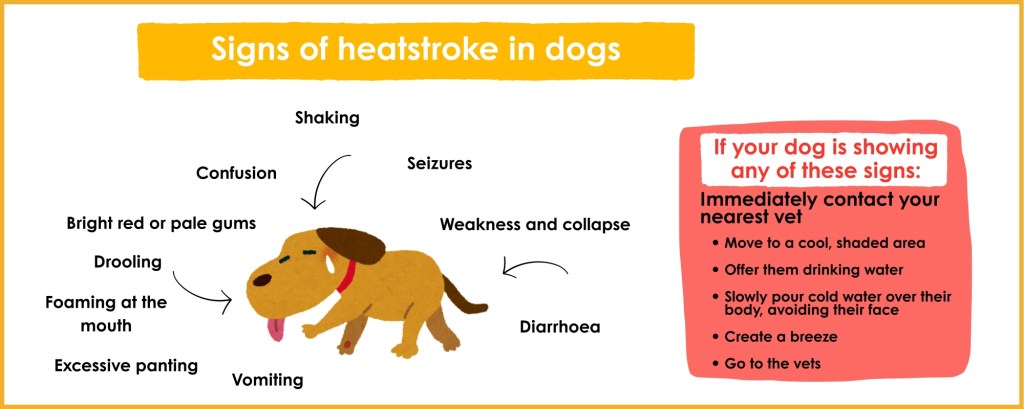
Mild:
- Panting
- Fast breathing/difficulty breathing
- Lethargy (low energy)
Moderate:
- Drooling
- Foaming at the mouth
- Vomiting
- Diarrhoea
- Bright red gums/very pale gums
- Shaking
- Weakness and collapse
Severe:
- Confusion
- Seizures
- Unconsciousness
- Vomiting with blood
- Diarrhoea with blood
Heatstroke first aid for dogs
Act quickly but stay calm – the faster your dog cools down the better their recovery.
Step 1: Move your dog to a cool, shaded area
Step 2: Cool your dog down straight away
- Gently pour cold water (water from the cold tap is fine) over their whole body
- Start slowly so they don’t panic, but aim to soak their whole body as calmly and quickly as possible
- Be extremely careful they don’t inhale any water by keeping it away from their nose and mouth
- Alternatively, if they are used to water and won’t panic, you can submerge their whole body (except for their head) into water
- Create a breeze by opening doors and windows or turning a fan/air-con on
- Offer them a drink of cold water but don’t force them to drink if they don’t want to
- Put them on top of a cold wet towel
- Wrap an ice pack/frozen veg in a towel and place it in between their thighs (if they are small, place them on top of it)
- Don’t cuddle them or cover them with a wet towel, as this will make them even hotter
Step 3: Call your vet as soon as possible
- Ideally go to your nearest vets
- Transport them in an air conditioned car/a car with the windows open (but make sure they can’t escape)
- If possible bring someone with you to keep cooling them while you travel
Preventing heatstroke in dogs
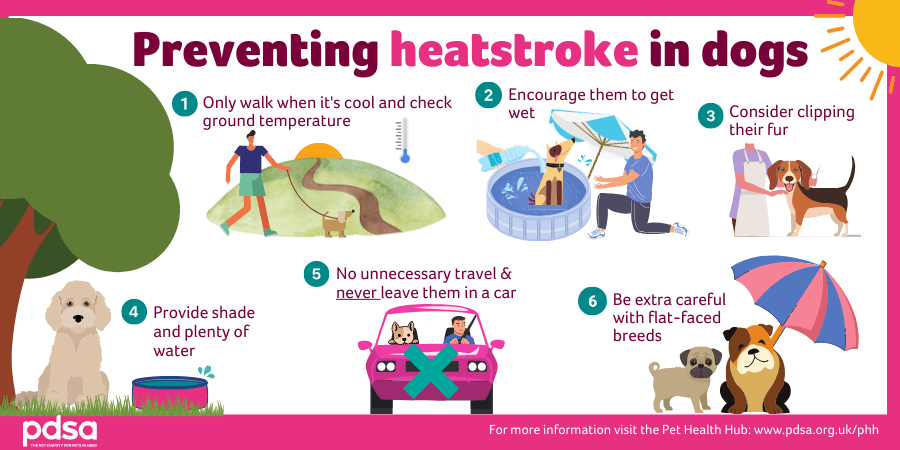
It’s vitally important to protect your dog from heatstroke, especially if they are flat-faced, overweight, or have a thick coat. There are some simple things that you can do to prevent it, such as:
- Walk them when it’s cool: Avoid walking your dog in the hottest part of the day, instead take them out in the early morning/evening when it’s cool. Avoid exercise on hot days completely if your dog is unfit, elderly, young, overweight, unwell, or has breathing difficulties.
- Make sure they always have access to shade and water: It’s a good idea to take water with you on walks – especially on warm days.
- Get them wet on warm days: Pour water over your dog, or encourage them into cool water (such as a paddling pool) on hot days. But always make sure they stay in the shade and don’t get too excited as this can still cause them to overheat. Never force your dog into water if they’re scared.
- Use a harness instead of a collar: Attaching a lead to a harness will put less pressure on your dog’s throat, making it easier for them to pant and cool down. This is especially important if your dog has breathing problems, or is brachycephalic (flat-faced). Remember to keep your dog’s collar on even if you are using a harness to walk them – they are a legal requirement.
- Never walk your dog on a hot surface: If you can comfortably place the palm of your hand on it for 7 seconds it’s okay – sand, artificial grass and tarmac get especially hot.
- Never leave your dog in a car on a warm day: Not even for a few minutes, with the windows open, or in the shade.
- Avoid travelling with your dog in a car when it’s hot: If a journey is absolutely necessary, make sure they are in the shade, have air flowing around them and can access drinking water. Cooling mats can be useful when travelling on warm days.
- Keep your dog a healthy weight: Overweight dogs find it more difficult to stay cool.
- Consider having your dog clipped: Especially in the warmer months if they have a heavy coat. Brushing your dog’s fur can also help.
Heatstroke in brachycephalic (flat-faced) dogs
Dogs get rid of a significant amount of body heat through their nose as they breathe out. Brachycephalic (flat-faced) dogs struggle to release heat this way because they have much less space inside their nose, which puts them at a very high risk of heatstroke, even on cool days. English Bulldogs are 14 times more likely to develop heatstroke than Labradors, and Pugs are 6 times more likely! Dogs most affected include the Pug, English Bulldog, French Bulldog, Dogue de Bordeaux, Pomeranian, Shih Tzu and Boston Terrier.
Further information
Hot Dogs research team member Dr Dan O’Neill recently joined Jo Good and Anna Webb on “Barking at the Moon” on BBC Radio London to talk all things “Hot Dogs”.
In this 10 minute recording Dan outlines:
- The dogs at increased risk of heatstroke
- What triggers heatstroke in dogs
- How to use human heat-health alerts to identify high risk periods
- How to cool a dog with heatstroke/overheating
- How to prevent heatstroke
You can listen to the recording (with accompanying slides and references) here:
