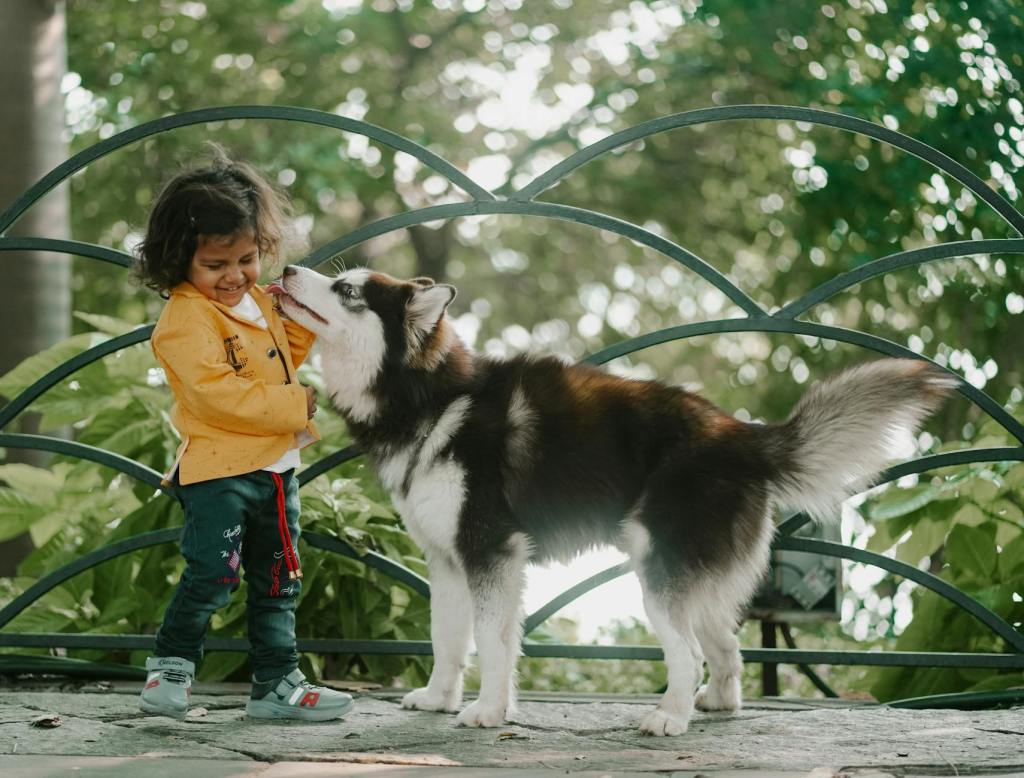
The bond between your child and dog can bring fun and happiness to family life. While we don’t expect our own dog to bite, it’s important to remember any dog can bite if they feel they have no other option. Up to 91% of bites to children happen at home with a dog they know. Last year, over 1,700 children were admitted to hospital with dog bites. Luckily, most bites are also preventable.
Close supervision keeps children safe
Close supervision can feel like a big ask. But Dogs Trust breaks it down into three key things:
- Stay close: Watch, listen and stay close so that you can respond before anything bad happens.
- Step–in: Intervene if your dog or your child is behaving unsafely or if either one looks uncomfortable.
- Separate: Keep children and dogs separate when you know you’re likely to be distracted, like during the morning rush, making the dinner, or answering the front door. You can use a safety gate, put your dog in another room, or take your child or dog with you.
Understanding a dog’s body language
Your dog’s body language tells you how they’re feeling. As a dog owner, it’s always a good idea to keep an eye on your dog’s body language and behaviour and be on the lookout for any changes, as these can be a sign that something’s wrong. Being able to spot the signs early and separate your dog and your child helps you to stop a situation from becoming risky.
The RSPCA outlines distinct behaviours that dogs show when they are worried and when they are angry or very unhappy. Use this guide to help you recognise important body language signals and get to know how your dog is feeling.
A happy dog
A dog who is happy will be relaxed.
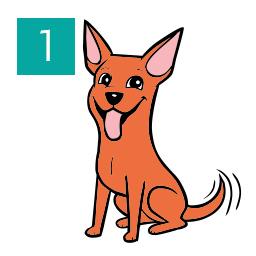
Dog has a relaxed body posture
Smooth hair, the mouth is open and relaxed, ears are in a natural position, the tail is wagging and the eyes are a normal shape.

Dog is inviting play with bottom raised
Smooth hair and a high wagging tail. Eyes are a normal shape, ears are in a natural position and they may be barking excitedly.
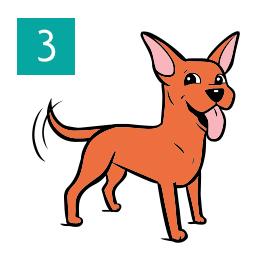
Dog’s weight is distributed across all four paws
Hair is smooth, tail is wagging, face is interested, alert and relaxed and their mouth is open.
A worried dog
These dogs are telling you that they’re uncomfortable and don’t want you to go near them.

Dog is standing
Body posture and head position is low. Tail is tucked under, ears are back and the dog is yawning.
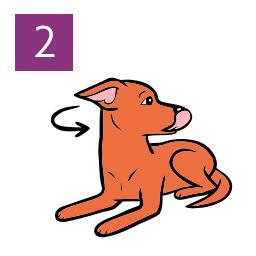
Dog is lying down
Avoiding eye contact or turning head away from you, lip licking and with ears back.
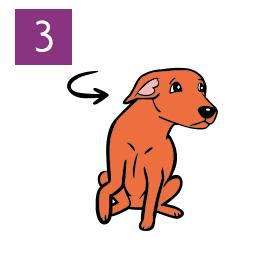
Dog is sitting
Head lowered, ears are back, tail tucked away, not making eye contact, yawning, raising a front paw.
An angry or very unhappy dog
These dogs aren’t happy and want you to stay away or go away.

Dog is standing
Stiffened body posture, weight forward, ears are up, hair raised, eyes looking at you – pupils dark and enlarged – tail is up and stiff, wrinkled nose.

Dog is lying down
Cowering, ears flat, teeth showing, tail down between its legs.
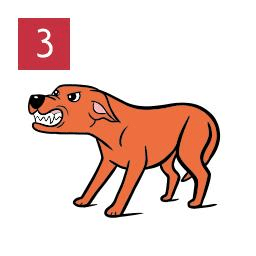
Dog’s weight is towards the back
With body down and weight towards the back, head tilted upwards, mouth tight, lips drawn back, teeth exposed, eyes staring, ears back and down, snarling.
Remember every dog is an individual and may have different ways of showing that they are uncomfortable, worried or anxious. We need to get to know these signs in our own dog so that we can step in early. Use these guides from the RSPCA and Dogs Trust to help you better understand your dog.
